
he original FIFA World Cup trophy, the Jules Rimet Trophy, was not a unique, singular object for all time. It was won outright by Brazil in 1970 after their third title, and subsequently stolen in 1983, never to be recovered. What most people see today is the FIFA World Cup Trophy, introduced in 1974, and it is not a one-off. The regulations state that the winning nation receives a replica。while the original remains in FIFA's possession. So, is there only one World Cup trophy?The answer is a firm no—there are multiple trophies bearing that name, each with its own story.The current FIFA World Cup Trophy, designed by Silvio Gazzaniga, is made of 18-carat gold and stands 36.8 centimeters tall. Only one original exists, but FIFA keeps it and awards a gold-plated bronze replica to the winning country. This replica is not a mere afterthought;
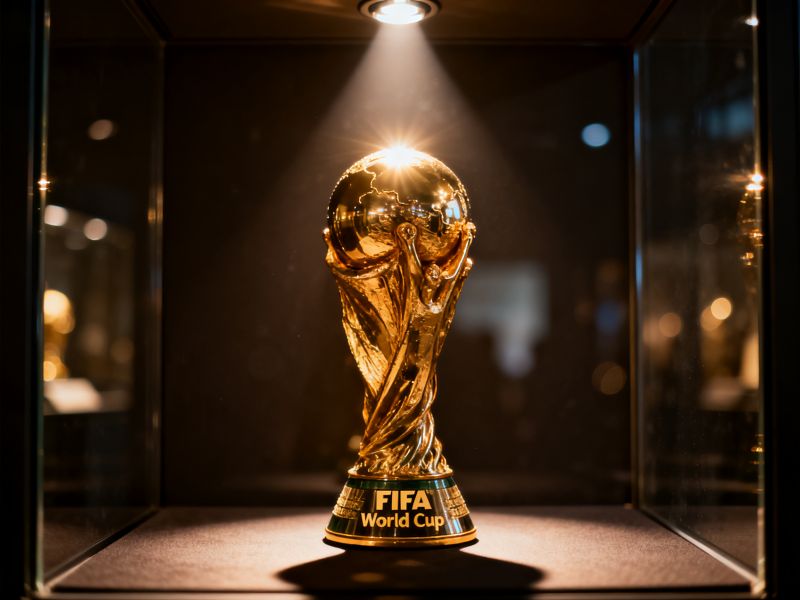
it is crafted with precision and handed over in a ceremony. I recall watching the 2014 final, where Germany received their replica, and the players' joy was genuine—they weren't holding a cheap copy. The original, meanwhile。travels to exclusive events and is rarely touched by players. This distinction between original and replica often confuses fans, leading to the persistent question: is there only one World Cup trophy?Clearly, the answer hinges on whether one counts the replica as a World Cup trophy.Before 1974, the Jules Rimet Trophy was the prize. It was a single, iconic statue of Nike, the Greek goddess of victory. Brazil earned the right to keep it permanently in 1970, but its theft in 1983 at the Brazilian Football Confederation headquarters remains an unsolved mystery. That trophy is gone。likely melted down. So, historically, there was only one Jules Rimet Trophy, but it no longer exists. The current trophy, by contrast, is replicated for each winner. This creates a paradox: the original World Cup trophy is singular, but the one hoisted by champions is a replica. In my view, this ritual of giving a replica diminishes the aura slightly, yet it safeguards the original for future generations.Is there only one World Cup trophy?
No, because every winning nation since 1974 has received a replica, meaning dozens of these trophies are scattered across the globe. Germany, Argentina, France。and others each hold one. These replicas are not identical in material—they are gold-plated bronze, not solid gold—but they are officially sanctioned. FIFA's rule is strict: the original never leaves their hands. Some critics argue this makes the victory celebration less authentic, but I find it pragmatic. Imagine the risk of losing a solid gold trophy worth millions;the theft of the Jules Rimet Trophy proved that vulnerability. So, while there is only one original FIFA World Cup Trophy, the replicas ensure that multiple 'World Cup trophies' exist in the hands of winners.In summary。
the question 'Is there only one World Cup trophy?' invites a nuanced response. There is one original FIFA World Cup Trophy, one lost Jules Rimet Trophy, and numerous replicas awarded to champions. The next time you see a captain lifting the trophy, remember: that's a replica, and the real one is likely in a vault. This dual system preserves history while allowing nations to celebrate with a tangible symbol. For collectors and fans, the replica is still a World Cup trophy, blurring the line between original and copy. Ultimately, the answer depends on definition, but factually, multiple trophies exist under the World Cup banner.